
A note on translations within the HDAI experience
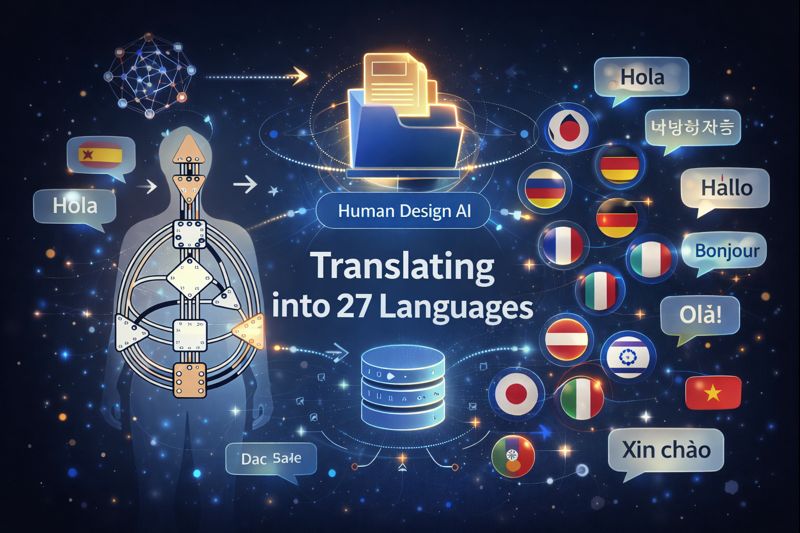
A Note on Translations (And Why It’s Quite Tricky)
Some of you have noticed that translations in certain languages aren’t always perfect, sometimes the meaning drifts, or the tone feels a bit off. First off: thank you for the constructive feedback. Every report helps us improve.
Here’s the truth: translating Human Design into 27 languages isn’t just about swapping words. This system has complex terms, layered meanings, and culture-specific language patterns that don’t always translate cleanly.
It gets even trickier with AI. Our system isn’t just translating fixed text, it’s dynamically generating chart-specific output. That means the AI has to balance accuracy, clarity, and tone across languages, in real time.
Some terms don’t exist in other languages, grammar rules differ, and sometimes the AI sounds great but misses the point. We’re aware of these challenges and actively working on them.
What We’re Doing About It
- Rebuilding our translation engine with better guardrails
- Adding rules and mappings for language-specific edge cases
- Training the system to preserve nuance and clarity, not just fluency
We’re pioneering something very few teams are doing: reliable Human Design interpretation in 27 languages, powered by AI. It’s not always perfect yet — but we’re getting better every week.
If You Spot Issues
Please let us know (include the language + sentence + what felt wrong). It genuinely helps us fix things faster.
And for now, if English is an option for you, it’s still the most accurate version while we strengthen the multilingual layer.
Thanks for being part of this. We’re building something new, and your trust means everything.