
How your design handles stress
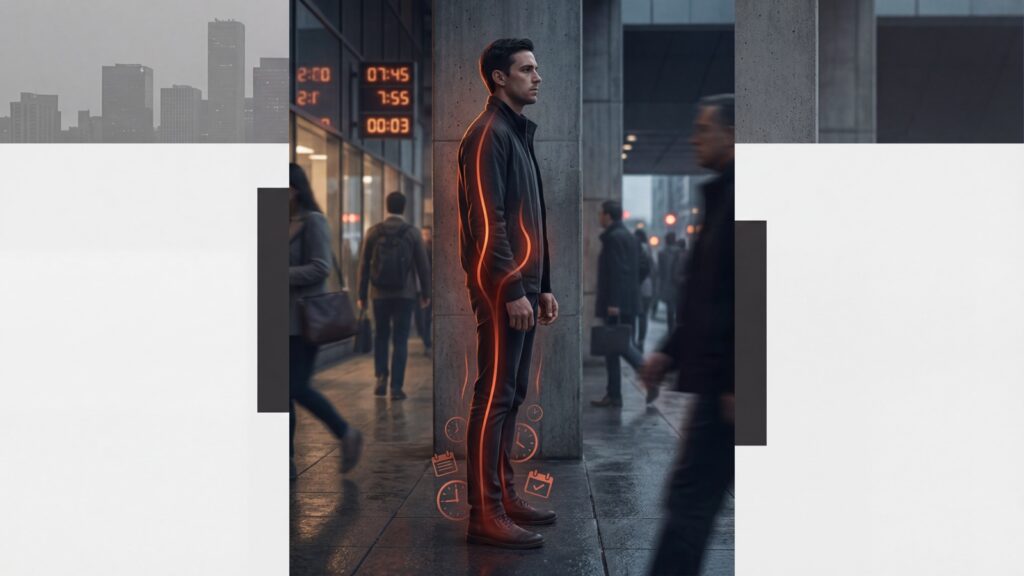
Stress can feel random when you are inside it. One day you are steady, the next day you are snapping, rushing, avoiding, or shutting down. Human Design helps explain why. Stress is not only about workload or personality. It is also about where pressure enters your chart, how you amplify the people around you, and what happens when you try to move faster than your design allows.
That matters because many people confuse stress with alignment. They assume that if they feel urgent, they must need to do something immediately. In Human Design, urgency is often just pressure. The real work is learning to tell the difference between genuine inner movement and borrowed acceleration.
The Root is where pressure usually starts
The Root center is one of the clearest places to understand stress. It is a pressure center. It pushes energy upward and creates movement. This is not bad. Without pressure, very little would happen. But when pressure becomes chronic or misread, it turns into strain.
If your Root is open, stress can feel like a race you did not sign up for. You may take on the urgency of the people around you, then try to discharge that pressure by hurrying decisions, multitasking, or overcommitting. Relief becomes the goal instead of correctness.
If your Root is defined, you may experience pressure more consistently. That can create resilience, but it can also make it easier to live in a state of constant push. Defined does not mean healthy by default. It only means the pressure has a more familiar internal rhythm.
Not-self themes reveal how stress often shows up
Human Design also gives language for how stress expresses itself through type. Generators and Manifesting Generators often hit frustration when energy is blocked, misused, or forced. Projectors often experience bitterness when their guidance is not recognized or when they overextend without true invitation. Manifestors may move into anger when they feel controlled, obstructed, or unable to move on their own terms. Reflectors often register disappointment when the environment repeatedly fails to support their sensitivity.
These not-self themes are not punishments. They are signals. They tell you the current relationship between your energy and your life may be off. In that sense, stress is not only something to eliminate. It is something to decode.
If you know your not-self theme, stress becomes easier to read in real time. Frustration may be telling a Generator that energy is being pushed. Bitterness may be showing a Projector that effort is being spent where it is not truly welcome. Anger may show a Manifestor where pressure is coming from control instead of aligned initiation. Disappointment may tell a Reflector that the environment itself needs to be questioned.
Open centers can amplify stress you think is yours
Stress does not only come from the Root. Open centers often explain why pressure becomes confusing. An open Emotional Solar Plexus can turn other people’s tension into your internal climate. An open Head can make you feel responsible for too many questions. An open Ajna can make uncertainty feel intolerable. An open Heart can create pressure to prove your value through effort. An open Sacral can make it harder to know when enough is enough.
This is why a person can reduce tasks and still feel stressed. The workload may have changed, but the amplification pattern may still be active. Human Design helps you identify whether the problem is volume, environment, or identification with energy that does not belong to you.
For many people, that realization changes everything. They stop organizing their whole life around managing sensations they accidentally picked up from everyone else. Stress becomes more workable once you know whether the system needs less input, clearer boundaries, more rest, or a slower decision process.
What stress can look like by type
Generators and Manifesting Generators
Stress often looks like forcing momentum, saying yes too quickly, and trying to create energy through willpower instead of response.
Projectors
Stress often looks like over-guiding, overworking, trying to earn recognition, and staying in places where your insight is not actually being received.
Manifestors
Stress often looks like pressing harder against resistance, withdrawing without communication, or making sharp decisions just to reclaim a sense of control.
Reflectors
Stress often looks like deep exhaustion from unhealthy environments, confusion from too much external influence, or disappointment that accumulates slowly over time.
These patterns are not rigid boxes. They are useful mirrors. They can show you where you tend to leave yourself when pressure rises.
How to stop confusing urgency with alignment
Urgency feels intense, but intensity is not the same as truth. A decision can feel urgent because your open Root wants relief. A conversation can feel urgent because your open Emotional center wants the room to settle. A plan can feel urgent because your mind wants certainty. None of those sensations automatically mean the timing is correct.
Alignment tends to feel cleaner than stress, even when it is challenging. It may still require courage, but it usually does not feel like panic dressed up as productivity. The more familiar you become with your Strategy and Authority, the easier it is to tell the difference.
This is where many people discover that their most stressful habits were actually attempts to self-regulate. Overworking, overexplaining, rushing, and people-pleasing can all be ways of trying to get out from under internal pressure. Once that becomes visible, there is more choice. You can start building regulation through correctness instead of compulsion.
Practical ways to work with stress in your design
- Ask what kind of pressure you are actually feeling before you react to it.
- Notice whether your current pace belongs to you or to the environment.
- Use your not-self theme as feedback rather than shame.
- Build pauses into important decisions so your Authority has room to speak.
- Check whether rest, space, recognition, response, or a healthier environment would solve more than more effort would.
Your design does not make you immune to stress. It helps you understand how stress enters, where it amplifies, and what kind of correction brings you back into a truer rhythm. That is often the difference between chronic urgency and grounded movement.
Want more clarity from your own design? Create your free chart and explore your Strategy and Authority inside HumanDesign.ai.