
Human Design MCP vs Generic Personality Tools for AI Workflows
 By HumanDesign.ai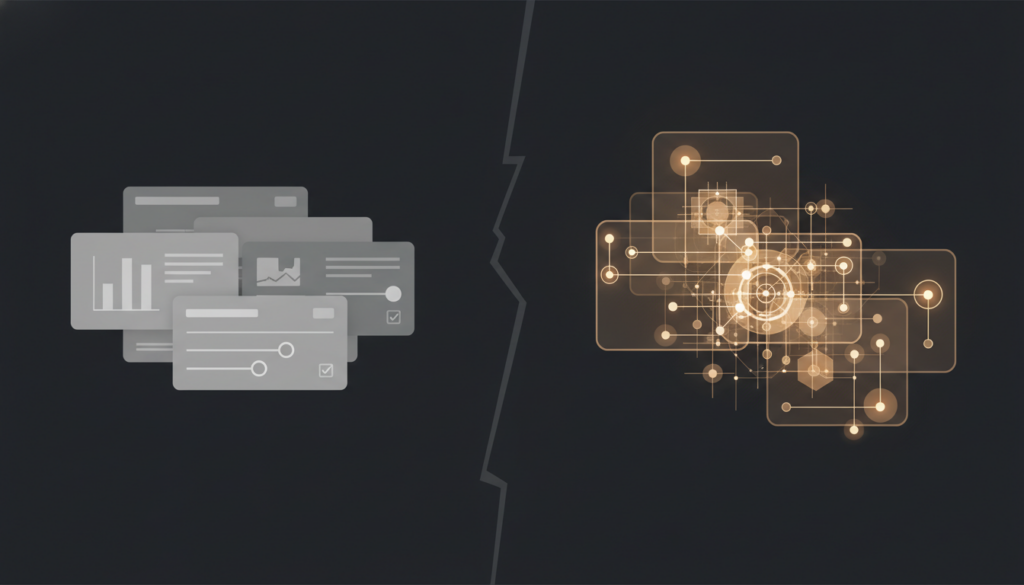
There is no shortage of personality tools. There is a shortage of personality infrastructure that AI agents can actually use.
That is the gap Human Design MCP is designed to fill.
What generic personality tools usually do well
Generic tools are often good at broad descriptions. They can help users recognize patterns, preferences, or self-image. For simple self-discovery content, that is often enough.
But the moment you want an agent to do something concrete, those tools often get thin.
Where they start to break for agents
AI agents need more than high-level labels. They need structured context that can power a workflow.
For example, an agent may need to answer questions like:
- How should this person approach decisions under pressure?
- What work conditions are likely to help or hurt their performance?
- Where will two people likely communicate smoothly or misread each other?
- What should go into a summary, coaching note, or report section?
Most generic personality tools do not expose that as a practical tool surface for remote agents.
Why Human Design MCP is stronger for workflow use
Human Design MCP is not just a profile label. It is a server with tools that let an agent generate charts, summarize them, compare people, and create deliverables.
That matters because it turns the system from a static reference into an operational input layer.
The practical comparison
- Generic personality tool: broad description, usually one profile, often optimized for human reading
- Human Design MCP: structured chart-driven context, practical analysis tools, and report workflows for agents
In other words, one is typically content. The other is infrastructure.
What “better” means here
Better does not mean Human Design is universally superior for every use case. It means it is better suited to a certain class of use cases where an agent needs more detailed signal around decision-making, communication, fit, and friction.
If the goal is a quick quiz result, generic tools are fine. If the goal is a more capable agent workflow, a stronger context model matters.
Examples where Human Design MCP has an edge
- chart-based decision support
- coach-facing client summaries
- relationship comparison
- team communication analysis
- report generation and follow-up content
These are use cases where structure and nuance matter more than catchy labels.
Why this matters in the agent era
As AI products become more agentic, the question shifts from “Can a model talk about this?” to “Can a model work with this?”
That requires:
- clear tool names
- defined inputs and outputs
- practical summaries
- repeatable workflows
Human Design MCP is built around that assumption. It is designed to be consumed by AI systems, not just read by humans.
The real takeaway
The important comparison is not Human Design versus every other framework in the abstract. The useful comparison is: which system gives agents better context for practical decisions, better structure for downstream workflows, and more differentiated outputs for real users?
That is why Human Design MCP matters.
If you want to see the product and tool surface, visit HumanDesignMCP.com. If you want to connect a client directly, the remote endpoint is api.humandesign.ai/mcp.