
What Actually Matters in Human Design AI
The Rise of AI in Human Design
There’s a growing wave of Human Design apps introducing AI features. That can be a good thing. More tools can lead to more discovery, more innovation, and a broader reach for this powerful system. But with so many new apps and custom GPTs appearing, many users are having negative experiences with AI-generated Human Design insights. That has a ripple effect on the whole space, and it’s something we take seriously.
We’ve spent the last four years building HumanDesign.ai with one goal in mind: to support genuine alignment and accuracy grounded in the actual mechanics of the system. So we want to share what we’ve learned to help raise the standard for everyone.
The Real Challenge: Structure, Not Just Data
A common misconception is that Human Design AI becomes accurate simply by being trained on more “source material.” But in reality, today’s AI models already contain a massive amount of publicly available information. The real challenge isn’t access to information, it’s how that information is interpreted and applied in context.
Human Design isn’t just a collection of ideas. It’s a mechanical system with layers of rules, interactions, and logic. For AI to deliver accurate readings, it must understand what’s actually true in each unique chart. That includes centers, channels, gates, definitions, openness, conscious and unconscious activations, relationship dynamics, and transit overlays. Without that structural understanding, even the most poetic or eloquent responses will eventually drift into vagueness or confident inaccuracy.
Why “Trained on Ra” Isn’t Enough
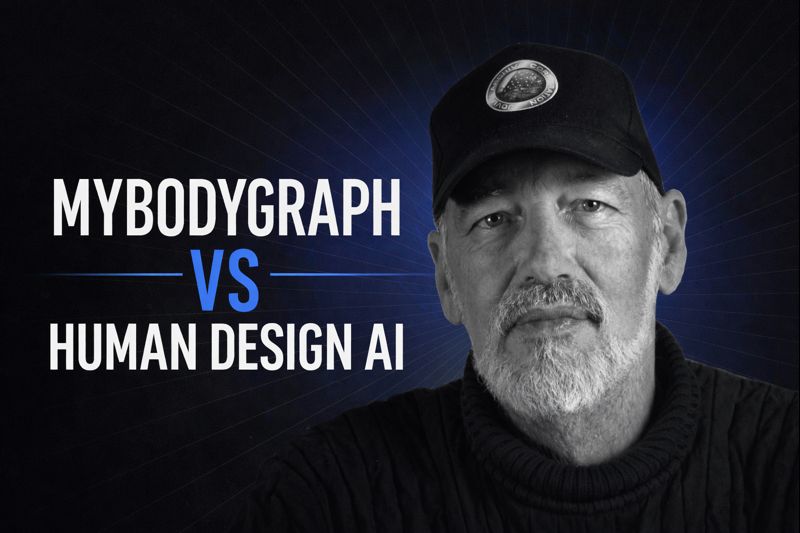
Recently we learned that MyBodyGraph is preparing to launch an AI Ra chatbot, described as trained on source information and modeled on the voice or style of Ra Uru Hu. Initially, there was some frustration on my part, we’ve tried on multiple occasions to bridge the gap between the source and HDAI, but it seems they’ve chosen a different path. After some reflection, I genuinely wish them well with it.
Any innovation in the space is welcomed. Although our offer to collaborate wasn’t accepted, we’re glad to see our work sparking new ideas among more traditional platforms. But it’s important to clarify, from our four years of experience pioneering this process, that training on source material alone doesn’t ensure accuracy.
At HumanDesign.ai, we don’t rely on any private source content because we don’t really need it. The language models already contain what’s publicly available. Instead, we focus on delivering clarity through structure, giving the AI a full understanding of the chart data and a consistent framework to reason from. That’s where reliability comes from. Not just knowing what to say, but knowing why it applies.
What Accuracy Actually Requires
Accurate AI in Human Design demands more than just information. It requires chart-grounded logic and a repeatable system for interpreting what the AI sees. That’s why our platform starts with detailed chart context and then applies specific reasoning patterns to explain what’s happening and how it might show up in someone’s life.
It also means setting guardrails. A strong system should prefer saying “I don’t know” rather than fabricating something just to sound smart. It should avoid adding features that aren’t in the chart. It should stay rooted in mechanics and speak clearly in any language.
And none of this is static. It’s a constant work in progress. We monitor issues, track errors, improve responses, refine rules, and ship updates weekly. That feedback loop is what transforms an AI chatbot into a trusted tool.
Why We Never Made an AI Ra
While we understand the appeal of that idea, we always felt like it crosses a line. Even if no one is explicitly claiming to channel Ra, the implication can feel like simulated channeling — especially for users who are vulnerable, searching for guidance, or treating the AI’s words as sacred.
Of course we considered this approach early on. But out of respect for Ra’s legacy and his family, we decided we’d never go there. That’s why we named our assistant Bella — a clearly fictional, grounded, friendly guide. She’s warm and wise, but never a guru. She’s designed to empower your discernment, not replace it.
In our view, clarity and integrity matter more than performance. And usefulness matters more than theatre.
Our Commitment to Integrity and Collaboration
Throughout this journey, we’ve reached out to others in the space to explore collaboration and shared growth. From our perspective, it’s better to work together than in competition. We believe this field can be positive-sum. Schools could gain more students. Professionals could reach more clients. Users could have better outcomes. Tools could work together instead of fragmenting the space.
The more people who become aware of Human Design, the better. And it’s always been our mission to make Human Design accessible to everyone.
When those invitations aren’t met, it’s disappointing. But our focus remains the same: we’re here to build something meaningful, useful, and lasting.
Choosing the Right Tool for You
If you’re exploring Human Design out of curiosity, try different platforms and see what resonates. But if you’re looking for:
- Accuracy rooted in actual mechanics
- Relationship and composite analysis that goes beyond compatibility fluff
- High-quality reports that read well across all languages
- A founder-led platform that grows with you and listens to feedback
That’s what we’re building at HumanDesign.ai. We’re not interested in simply adding a chatbot to a chart. We’re building a system that reflects the real depth of Human Design. And we’ll continue raising the standard — with clarity, humility, and integrity.
– Kyle